Goddess Lakshmi Story, Birth, Names & Lakshmi Puja
जय माँ लक्ष्मी
Goddess Lakshmi, also known as Maa Lakshmi,
is one of the most revered goddesses in Hindu tradition.
She is traditionally associated with prosperity, abundance,
good fortune, beauty and auspiciousness. Devotees worship
her with the hope of bringing peace, happiness and prosperity
into their homes and lives.
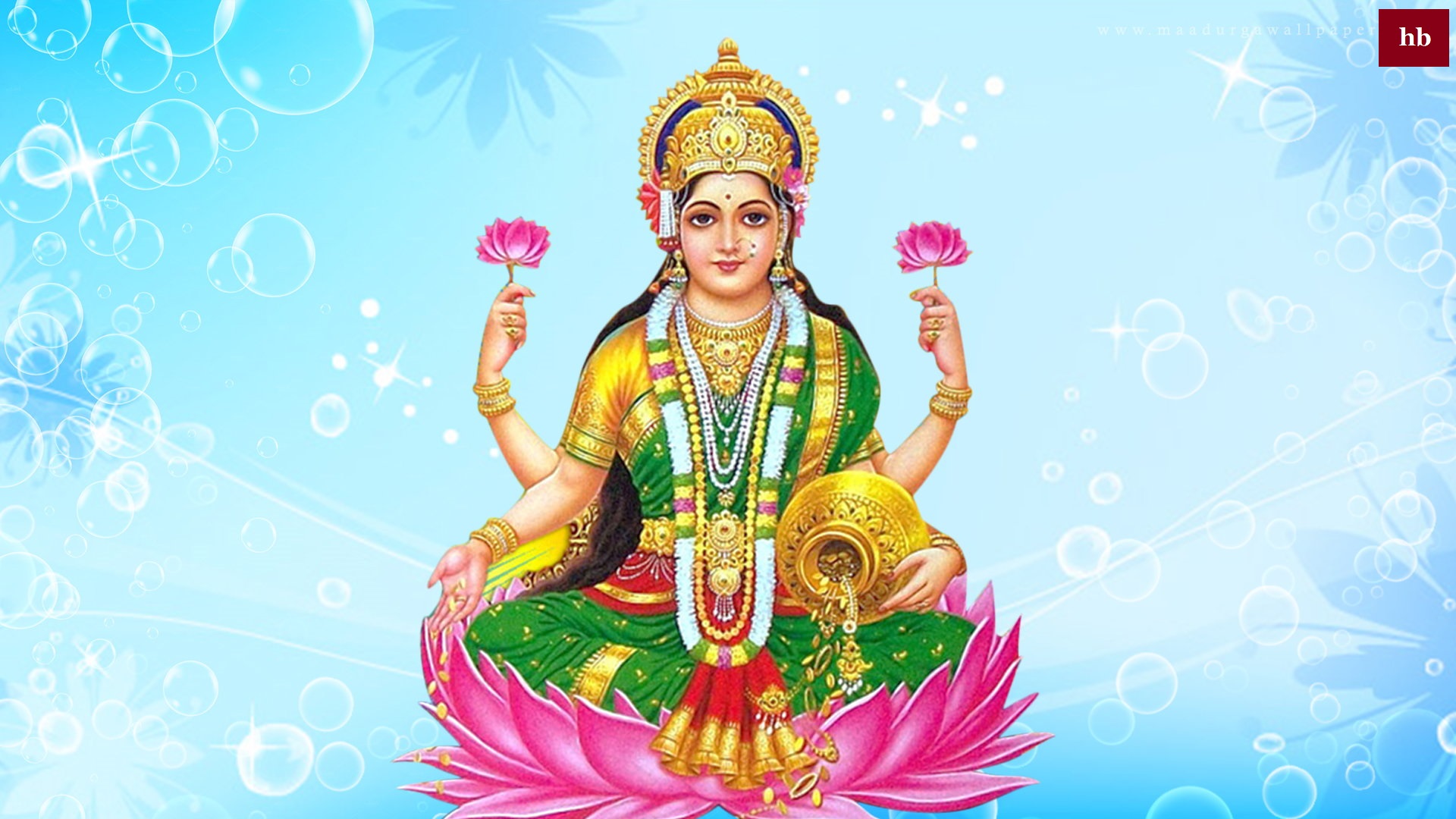
Goddess Lakshmi is traditionally regarded as the consort of
Lord Vishnu. She is commonly
depicted wearing beautiful garments and ornaments while
standing or sitting on a fully blossomed lotus. Lotus flowers,
elephants and streams of golden coins are among the important
symbols associated with her traditional imagery.
Lakshmi is especially worshipped during festivals such as
Diwali. Her worship is also an important part of many Hindu
household and religious traditions throughout the year.
Who Is Goddess Lakshmi?
Goddess Lakshmi is traditionally regarded as the goddess of
wealth, prosperity, fortune and beauty. However, the idea of
prosperity in Hindu thought can extend beyond money and
possessions. It may also include good fortune, abundance,
success, generosity, harmony and well-being.
The name Lakshmi is derived from the Sanskrit root
laksh, which is associated with a goal, aim or
mark. In this sense, the name is connected with the idea of
achieving an objective or attaining prosperity.
Lakshmi is often represented as a graceful goddess holding
lotus flowers. Her association with the lotus reflects the
traditional idea of purity and beauty rising above the
surrounding world.
Birth Story of Goddess Lakshmi
Hindu scriptures and traditions contain different accounts
concerning the origin and manifestations of Goddess Lakshmi.
One of the most famous stories describes her appearance during
the Samudra Manthan, or the churning of the
cosmic ocean.
According to this well-known account, the Devas and Asuras
joined together to churn the ocean in their search for
Amrita, the divine nectar associated with
immortality.
Mount Mandara was used as the churning rod, while Vasuki,
the serpent king, served as the rope. Lord Vishnu helped
support the cosmic undertaking in his Kurma, or tortoise,
form.
As the ocean was churned, numerous extraordinary beings,
objects and substances emerged. Among these was Goddess
Lakshmi, who appeared seated upon a beautiful lotus.
Her appearance was regarded as a moment of great
auspiciousness. After appearing from the cosmic ocean,
Lakshmi chose Lord Vishnu as her divine
consort. This story is one of the most widely known
traditional accounts of Lakshmi's appearance.
Goddess Lakshmi and Lord Vishnu
Goddess Lakshmi and Lord Vishnu are traditionally worshipped
together. Vishnu is associated with the preservation and
protection of the cosmic order, while Lakshmi is associated
with prosperity, abundance and auspiciousness.
Their relationship is an important theme in Vaishnava
traditions. Lakshmi is also connected with different
manifestations of Vishnu. For example, Sita is traditionally
associated with Lord Rama, while Rukmini is associated with
Lord Krishna.
In many traditions, the presence of Lakshmi alongside
Vishnu represents the harmony between preservation,
prosperity and divine grace.
Why Is Goddess Lakshmi Called Shri?
Shri, also written as Shree, is an
auspicious Sanskrit term traditionally associated with
prosperity, beauty, abundance, dignity and good fortune.
The word is commonly used as a respectful title before a
person's name and is also found in religious and cultural
contexts. Because of Lakshmi's strong association with
prosperity and auspiciousness, Shri is one of the names
and titles closely connected with her.
Symbolism of Goddess Lakshmi
Traditional images of Goddess Lakshmi contain several
symbols. Each element can have different interpretations
depending on the artistic and religious tradition.
-
Lotus:
The lotus is associated with purity, beauty,
auspiciousness and spiritual growth.
-
Four hands:
Lakshmi is often shown with four hands. In Hindu
interpretations, four hands can be associated with
the four Purusharthas: Dharma, Artha, Kama and Moksha.
-
Lotus flowers:
The flowers represent purity, beauty and the
blossoming of spiritual consciousness.
-
Gold coins:
Coins flowing from her hands traditionally symbolize
abundance, prosperity and generosity.
-
Elephants:
Elephants appearing with Lakshmi are often associated
with strength, abundance, royalty and auspiciousness.
Lakshmi Puja on Diwali
Lakshmi Puja is one of the most important
religious observances for many Hindu families during
Diwali, the festival of lights.
Before the celebration, families may clean and decorate
their homes with flowers, rangoli, lamps and other
traditional decorations. The preparation of the home is
often considered an important part of welcoming
auspiciousness.
During Lakshmi Puja, devotees may place an image or idol
of Goddess Lakshmi in the worship area and offer flowers,
fruits, sweets, lamps and other traditional offerings.
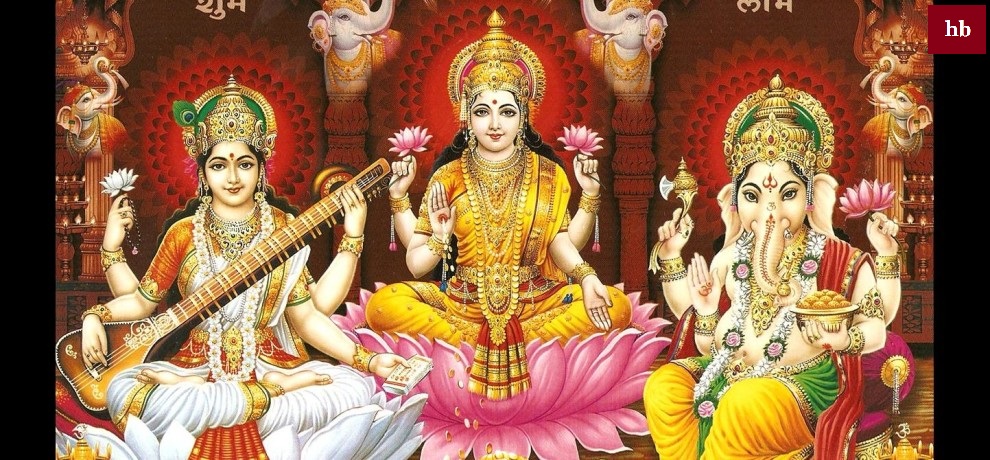
Many families also worship Lord Ganesha alongside Goddess
Lakshmi during Diwali. The exact rituals, prayers and
customs can differ according to regional and family
traditions.
How Is Goddess Lakshmi Worshipped?
Worship of Goddess Lakshmi varies across different regions
and Hindu traditions. Devotees may offer flowers, fruits,
sweets, incense and lamps while reciting prayers or
devotional names associated with the goddess.
During Diwali, many families decorate their entrances and
worship areas with diyas and rangoli. Some traditions also
include a Kalash, lotus flowers and other auspicious
objects during the puja.
Cleanliness, devotion and generosity are commonly emphasized
in traditions associated with Lakshmi worship. The details
of the ritual, however, may differ according to local
customs and family practices.
Ashta Lakshmi: Eight Forms of Goddess Lakshmi
Ashta Lakshmi refers to eight traditional
forms of Goddess Lakshmi. Each form is associated with a
particular aspect of prosperity and well-being.
-
Adi Lakshmi – the primordial form
of Lakshmi.
-
Dhanya Lakshmi – associated with
food, nourishment and agricultural abundance.
-
Dhairya Lakshmi – associated with
courage, strength and perseverance.
-
Gaja Lakshmi – associated with
abundance, royalty and prosperity.
-
Santana Lakshmi – associated with
children and family well-being.
-
Vijaya Lakshmi – associated with
victory and success.
-
Vidya Lakshmi – associated with
knowledge and learning.
-
Dhana Lakshmi – associated with
material wealth and abundance.
Names of Goddess Lakshmi
Goddess Lakshmi is known by many names in Hindu scriptures
and devotional traditions. Different names highlight
different qualities, forms or associations of the goddess.
- Shri
- Shree
- Mahalakshmi
- Padma
- Kamala
- Indira
- Ramaa
- Haripriya
- Narayani
- Chanchala
- Lokamata
Maa Lakshmi Mantra
Many devotees recite traditional Lakshmi mantras as part
of their personal prayers. One commonly recited devotional
mantra is:
ॐ श्रीं महालक्ष्म्यै नमः ॥
Om Shreem Mahalakshmyai Namah
The number of repetitions and the method of chanting can
vary according to individual or family tradition. People
following a specific religious practice may choose to
follow the guidance of their spiritual teacher or
established tradition.
Importance of Goddess Lakshmi
Goddess Lakshmi represents an expansive idea of prosperity
in Hindu tradition. Wealth can provide the means to support
a family, help others and pursue important responsibilities,
while prosperity is also associated with happiness,
generosity, good fortune and well-being.
The imagery of Lakshmi sitting upon a lotus also conveys
an important symbolic idea. The lotus grows in water and
mud but rises above it in beauty and purity. In this way,
the lotus is often understood as a symbol of maintaining
inner purity while living in the material world.
Frequently Asked Questions About Goddess Lakshmi
Who is Goddess Lakshmi?
Goddess Lakshmi is a Hindu goddess traditionally associated
with wealth, prosperity, fortune, beauty and auspiciousness.
She is traditionally regarded as the consort of Lord Vishnu.
How was Goddess Lakshmi born?
One of the best-known traditional accounts describes
Goddess Lakshmi appearing from the cosmic ocean during
the Samudra Manthan, or churning of the ocean. Different
Hindu traditions contain different accounts of her origin
and manifestations.
Who is the husband of Goddess Lakshmi?
Goddess Lakshmi is traditionally regarded as the consort
of Lord Vishnu.
Why is Goddess Lakshmi worshipped during Diwali?
Goddess Lakshmi is widely worshipped during Diwali because
the festival is traditionally associated with light,
auspiciousness, prosperity and new beginnings.
What does the lotus represent in Goddess Lakshmi's image?
The lotus is traditionally associated with purity, beauty,
auspiciousness and spiritual growth. It is one of the
most recognizable symbols associated with Goddess Lakshmi.
What are the eight forms of Goddess Lakshmi?
The eight commonly recognized forms of Ashta Lakshmi are
Adi Lakshmi, Dhanya Lakshmi, Dhairya Lakshmi, Gaja Lakshmi,
Santana Lakshmi, Vijaya Lakshmi, Vidya Lakshmi and
Dhana Lakshmi.
Explore More About Goddess Lakshmi
Explore these related pages to learn more about Goddess
Lakshmi, her worship and devotional traditions:
Goddess Lakshmi continues to hold an important place in
Hindu devotional life. Her association with prosperity,
beauty, generosity and auspiciousness makes her especially
significant during Diwali and other occasions when devotees
pray for peace, abundance and well-being.